Attribution Model Failures in Assistant-Mediated Purchase Journeys
AI assistants erase the research conversations that actually persuade buyers.
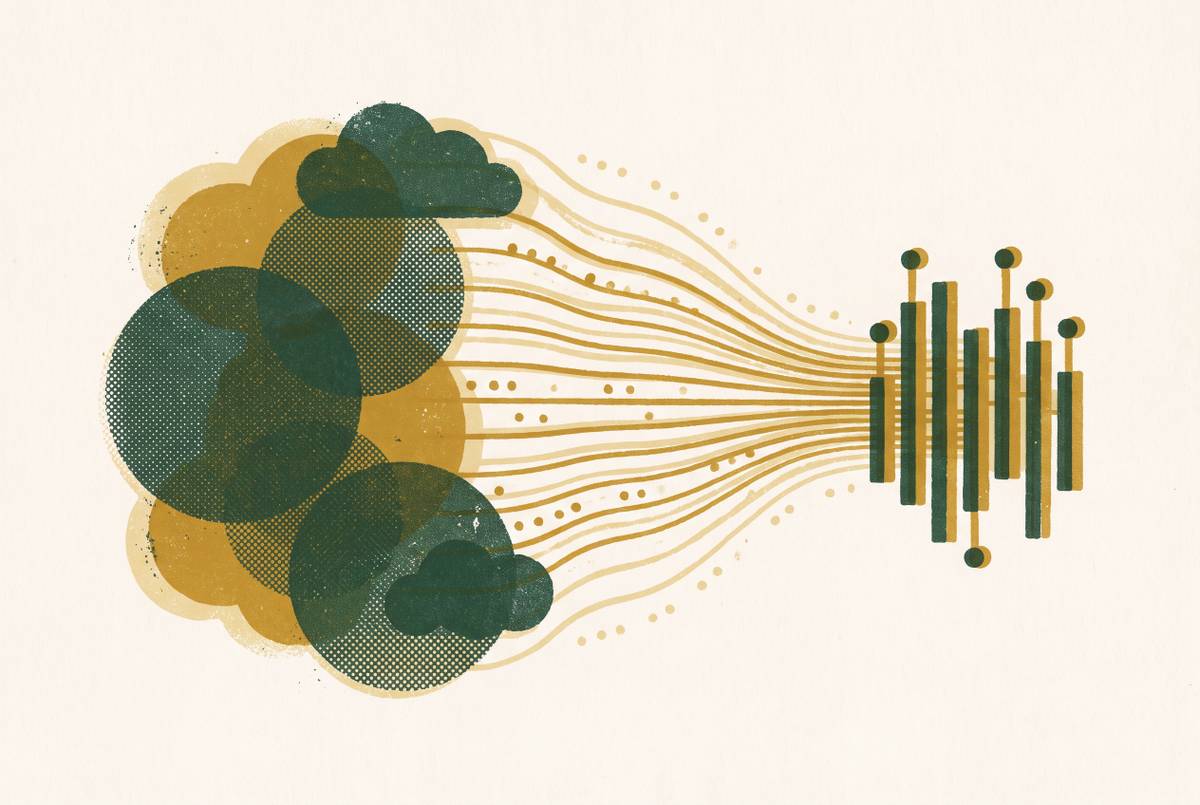
Marketers are still reading dashboards built for a world where every step a buyer took left a mark somewhere. That world is gone in the exact spot where it matters most. When someone asks ChatGPT to compare vendors, gets an answer, and later types a brand name straight into the address bar, that research conversation appears nowhere in the data. Attribution models weren't built to lie about this moment. They were built assuming it would leave a footprint, and it doesn't.
How existing attribution models assign credit
Last-click hands full credit to whatever touchpoint came right before the sale, on the theory that whatever closed the deal caused it. First-click flips that logic around, crediting the opening touch instead, which is fine for figuring out where buyers first hear about a brand but useless for everything that happened between that first hello and the eventual purchase.
Linear and time-decay models try to split the difference, spreading credit across every touchpoint the system can see, with time-decay giving extra weight to whatever happened closer to the sale. Position-based models (often called U-shaped) load 40% of the credit onto the first and last touch each, and W-shaped models stretch that idea further, adding a heavily weighted mid-funnel moment so three stages each get roughly 30%. All of these are more thoughtful than last-click. But every one of them shares a hidden requirement: they only work if the whole journey actually appears in the data. Once that visibility is removed, the model isn't wrong so much as it's confidently answering a question it can't actually see the answer to.
The signal environment these models depend on has already deteriorated before AI is added
The tracking infrastructure underneath all these models produces gaps in the data attribution relies on, and it was already fraying before AI assistants entered the picture. Tracking-consent prompts on major mobile platforms have settled into a steady state, with opt-in rates of 15–25% globally as of early 2026. Somewhere around three in four users of that platform's devices generate no deterministic signal an attribution model can use.
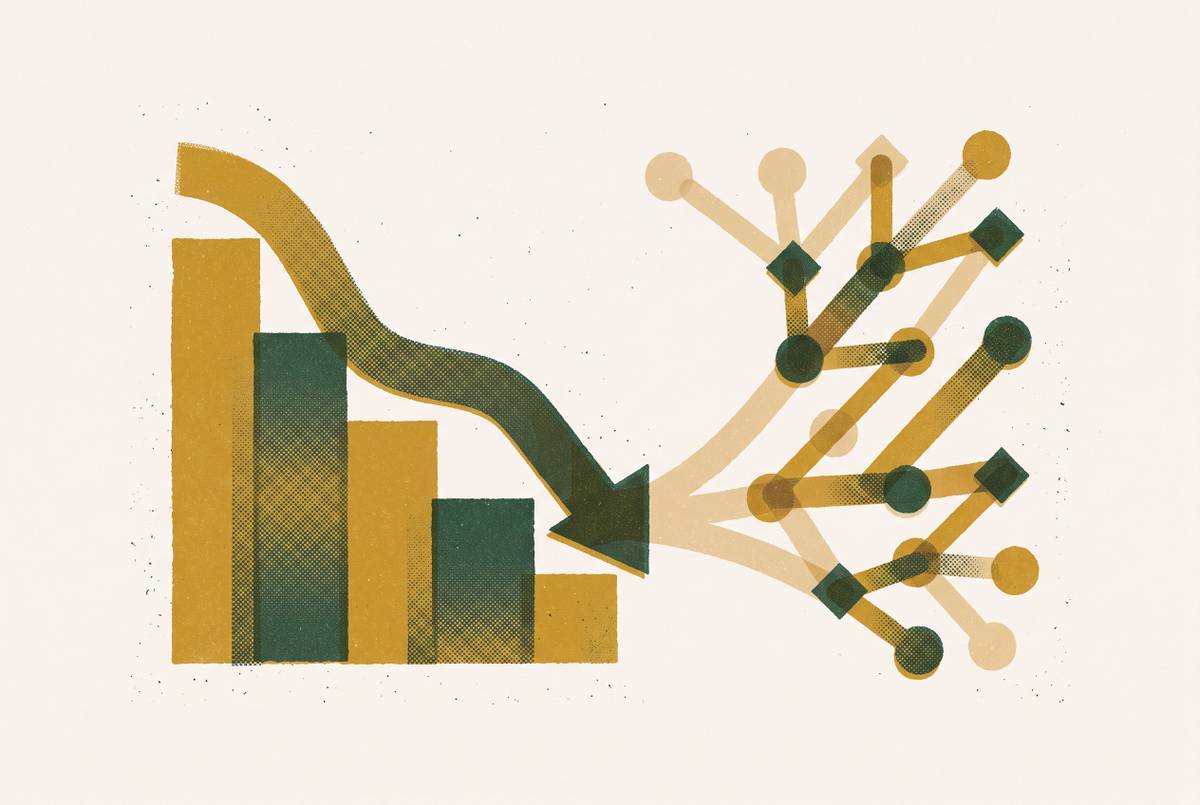
Chrome's phase-out of third-party cookies is about 80% complete as of the first quarter of 2026, with full removal targeted for the third quarter. Multi-touch attribution coverage, as a result, has fallen to somewhere between 30% and 60% of where it stood back in 2020. Adding regional data-privacy consent requirements makes traffic from that region lose even more visibility, unevenly: the users who decline consent or switch devices mid-journey simply vanish from the dataset. What's left in the dashboard isn't a full picture, it's whatever fraction of buyers happened to leave a legible trail. Cross-device behavior makes this worse on its own, independent of AI. A buyer who researches on a phone, compares options on a tablet, and buys on a laptop looks, to most systems, like three different people, and a model that can't stitch those sessions together can't credit the journey correctly no matter how sophisticated its math is.
Where last-click breaks first
Last-click has always had a bias problem. It rewards whatever channel happens to catch a buyer right at the moment of decision, branded search, retargeting ads, direct traffic, while giving zero credit to whatever created the demand. Google made data-driven attribution the default in Google Ads. It did so because last-click distorts budget decisions in a way that's predictable enough to name.
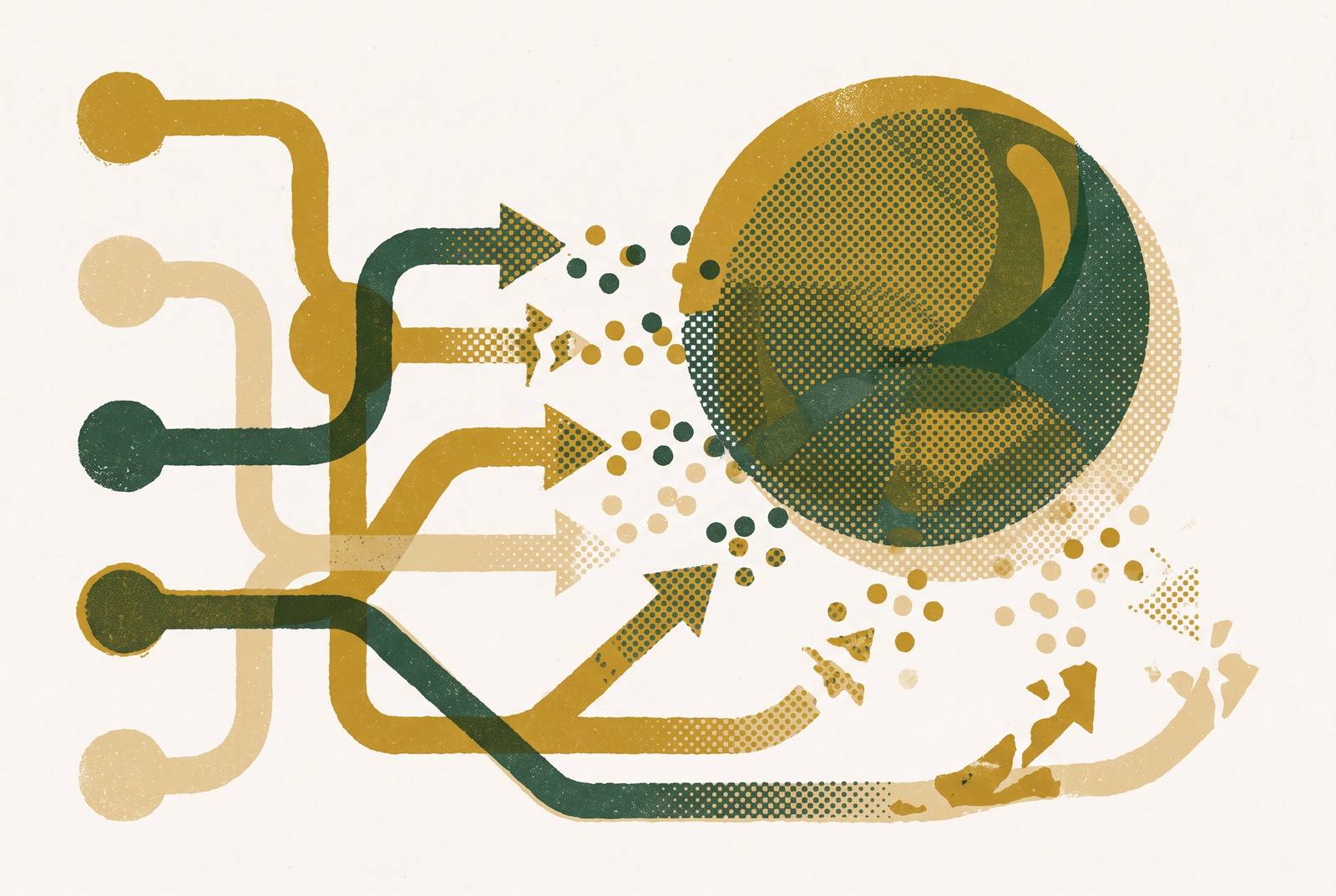
AI assistants make this same flaw more severe, not different in kind. An assistant answers the buyer's question, narrows down a shortlist of vendors, and the buyer, satisfied, navigates straight to the winning brand's site or searches its name directly. The last click a tracking pixel can see is a branded search term or a direct URL visit, so that's what gets the credit, even though the actual persuading happened earlier, inside a conversation no pixel could reach. B2B buyers now complete somewhere between 70% and 80% of their purchase decision before ever talking to a salesperson, and a growing share of that self-directed research happens inside AI chat interfaces that leave no referral trail behind. The Revenue Attribution Decay Model, a framework built specifically to name this problem, calls this stage "click-path decay." Tools like ChatGPT, Perplexity, and Claude return sourced answers that cite a brand by name, the user acts on that recommendation, and the analytics platform records the resulting visit as direct or branded search, never as the assistant that actually did the selling.
Where multi-touch attribution breaks
Multi-touch attribution was supposed to be the fix for last-click's blind spots, and for a while it was. Spreading credit across the observed journey instead of the final step gives marketers a better sense of which channels are doing real work along the way. But better isn't the same as correct: MTA still assigns credit by rule, following whatever weighting logic the model uses, not by proof that a given touch actually caused the sale.
Journey length is where this starts to break down badly. Dreamdata's 2026 benchmarks put the average B2B path to purchase at 272 days and 88 separate touchpoints. No cookie lives that long. MTA's identity graph, the system stitching together which touches belong to which buyer, simply falls apart across a span that wide, and the touchpoints lost tend to be those that fall outside the attribution window's reach, including early-funnel activity that shaped the buyer's thinking before anyone else got involved.
Attribution windows compound the problem. Shifting the measurement window from 7 days to 90 days can swing channel credit by more than 20 percentage points, and even a 90-day window still shortchanges upper-funnel activity in a journey that runs nearly nine times that long. Then add the AI layer on top: MTA can only distribute credit across touchpoints it can actually observe, and an AI conversation, by design, fires no referral, loads no pixel, passes no UTM parameter. So instead of the AI moment simply going uncredited, the model does something worse. It splits 100% of the credit across whatever visible touches remain, as if the conversation never happened at all, inflating the visible channels' apparent influence to fill a hole they didn't actually earn.
Where marketing mix modeling breaks when the AI touchpoint is invisible by design
Marketing mix modeling has enjoyed a resurgence precisely because it sidesteps all of this. MMM works at the aggregate level, doesn't need user-level tracking, and survives cookie deprecation without needing a patch, which explains why so many teams have leaned back on it as the privacy-safe fallback.
But MMM has its own foundational assumption, and AI assistants break it just as cleanly. MMM figures out a channel's contribution by correlating changes in spend with changes in outcomes over time. It needs the channel's influence to move when the spend behind it moves. An AI assistant citing a brand in response to a user's question is organic and earned media. It's organic and earned, with no spend line attached to it at all, so MMM has no variable to correlate with the resulting sales lift. The model has no mechanism to isolate that lift from other activity running concurrently. And this failure isn't isolated: AI assistants answering queries before users click through are eroding branded search itself, a signal MMM models have historically relied on. Something like 35% to 52% of branded-query attribution is being stripped out of GA4 and ad platform reporting simply because AI assistants answer the question before the user ever clicks through. MMM models trained on historical branded search data are now measuring a channel that's been partly hollowed out, with no way to know it.
The three structural decay stages where the AI layer absorbs attribution signal
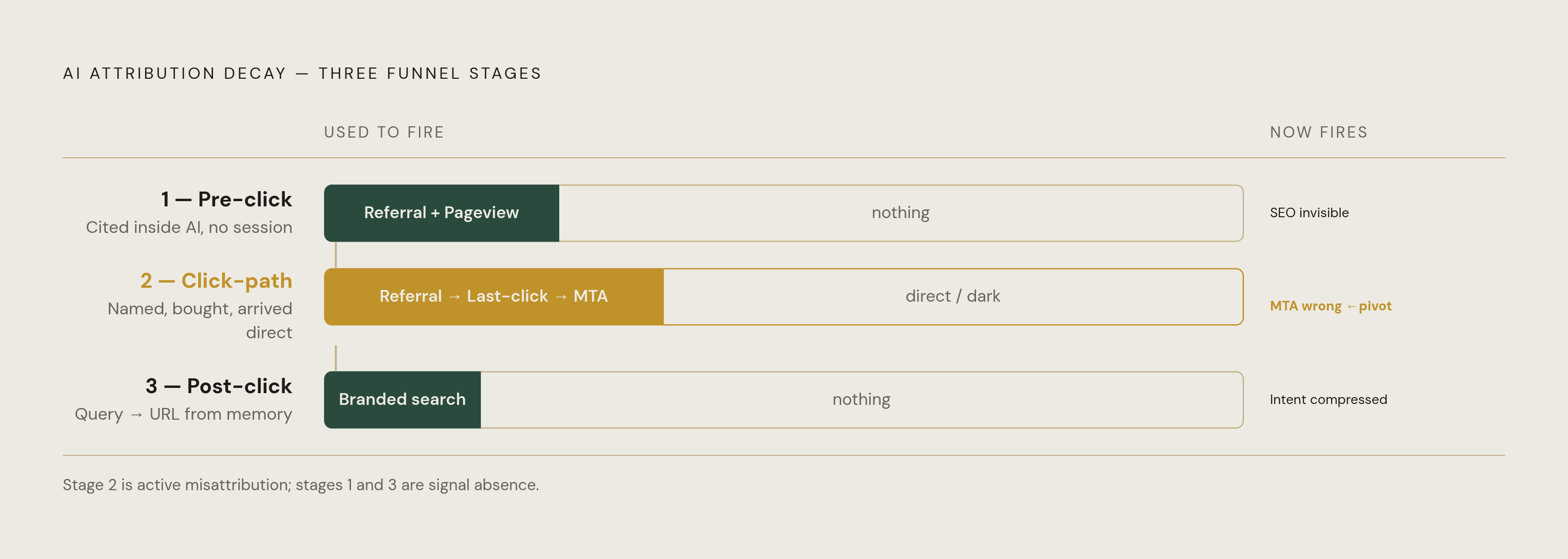
The Revenue Attribution Decay Model, published by Digital Applied in April 2026 as a seven-step methodology aimed squarely at AI-driven attribution loss, breaks this erosion into three stages, and each one hits a different part of the funnel.
Pre-click decay happens first. A user's question gets fully answered inside the AI interface itself, with the brand's content cited, quoted, or summarized, but no session ever opens, no referral ever fires, no click ever lands. This hits any channel that used to rely on people searching for answers and finding them organically: content marketing, SEO, video, all of it.
Click-path decay comes next, and it's the one that pulls last-click and MTA wrong in opposite directions at the same time. Assistants like ChatGPT, Perplexity, and Claude return answers that name a brand out loud, the user builds a shortlist inside that conversation, and then arrives at the site later through a direct visit or branded search, getting attributed to whichever of those the platform can see rather than to the assistant that actually did the convincing.
Post-click decay closes the loop. Buyers who once would've typed "brand name pricing" into Google to finish their research now just ask the assistant directly, type the URL from memory, or jump straight to a sales conversation. The signal that used to survive right up to the highest-intent moment gets compressed out of existence at exactly the point where it mattered most.
The shared measurement architecture failure behind the B2B offline gap and the AI conversation gap
None of this is actually new. It's a familiar failure wearing a new outfit. Something like 71% of B2B organizations already can't track offline-to-online journeys. Trade shows, phone calls, and in-person meetings make up somewhere between 7% and 12% of buyer journey touchpoints, and for enterprise deals specifically, sales calls drive 18% to 25% of influence at the decision stage, all of it invisible to a system built around clicks.
Only 24% of UK B2B organizations currently run multi-touch attribution. Most are still on single-touch models, quietly misallocating budget long before any AI assistant enters the picture. The parallel is exact: offline influence and AI-conversation influence are both real, both commercially decisive, and both produce nothing a click-based system can ingest. AI doesn't introduce a new kind of failure here, it scales up and speeds along one that measurement teams have been living with for years.
Braze's analysis lands on the same point from a different direction, arguing that some of the most persuasive moments in a buyer's path happen in private group chats or offline conversations that no attribution tool logs. What appears in the report as "direct" traffic is recording the last visible step of a journey, not the cause. It's recording the last visible step of a journey that started somewhere the dashboard never looked.
A triangulated measurement framework for when click-based signal cannot be recovered
Analysis from across 2026, including work by AI Digital, Improvado, Workshop Digital, Braze, and the team behind RADM, points in the same direction from different starting points: no single method is going to replace attribution the way attribution used to work. The lost signal isn't coming back, and building a bigger, smarter dashboard on top of a broken assumption won't fix that.
What's emerging instead is triangulation: layering methods that each cover a different blind spot rather than betting everything on one model's version of the truth. MMM handles the aggregate, channel-level view without needing individual user tracking. Incrementality testing, holding out a region or audience segment and measuring the actual lift, answers the causation question that MTA can only approximate through weighting rules. Brand lift surveys and direct buyer surveys can ask people outright where they first encountered a brand, catching the AI conversations and offline meetings that no pixel will ever see. And frameworks purpose-built for the AI gap, like RADM's decay-stage model, give teams a way to at least name where signal is being lost, even in cases where it can't be fully recovered.
None of this restores the clean, closed-loop attribution story marketers got used to. But declining opt-in rates and cookie deprecation were already quietly eroding that story well before AI assistants entered the picture. The honest version of measurement now involves triangulating across methods that were never designed to work together, because the alternative, pretending last-click or MTA still tells the whole story, means optimizing budget against a picture of the buyer journey that's been wrong for a while.
Sources
- Marketing Attribution Challenges: Why Traditional Models Fail
- Multi-Touch Attribution Models & Tools Guide 2026
- Revenue Attribution Decay Model for AI Search 2026
- AI Attribution in Marketing: How to Measure Impact
- Braze says marketing attribution can't see the moments that actually persuade buyers
- braze.com
- ChatGPT Ads Attribution: Tracking the Customer Journey in 2026
- From Prompt to Purchase: How AI Brand Recommendations Move Consumers on the Open Web